- Role
- Solo build
- Timeline
- 2026 · 3 months
- Stack
- React Flow, React, TypeScript, AWS
- Links
- Live
Most practice tools for the AWS Solutions Architect exam are multiple choice. Multiple choice teaches you to recognize answers, not design systems.
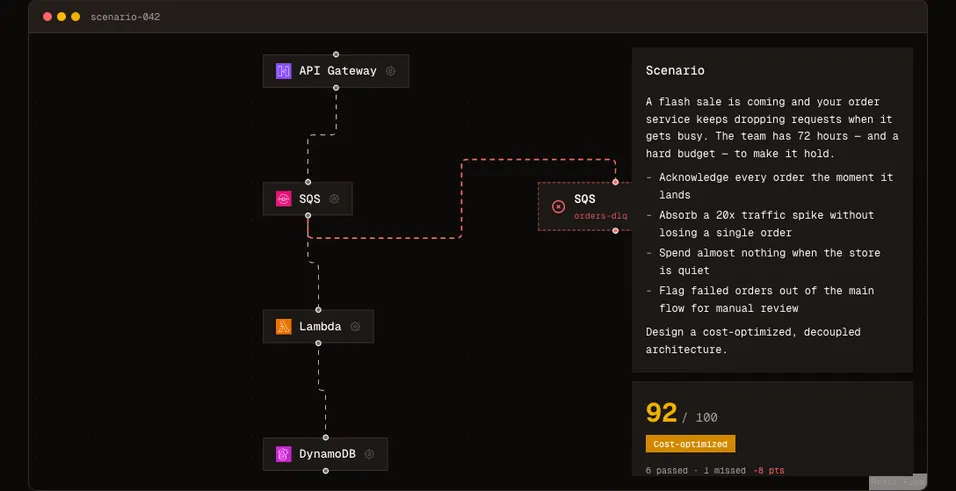
So I built one that asks for a design. You read a scenario brief, build the architecture on a canvas, and submit it. It grades what you built, check by check.
What it does
A scenario is a short brief. An e-commerce platform that keeps dropping orders during flash sales. A disaster-recovery plan for a bank. Five VPCs tangled up in peering connections.
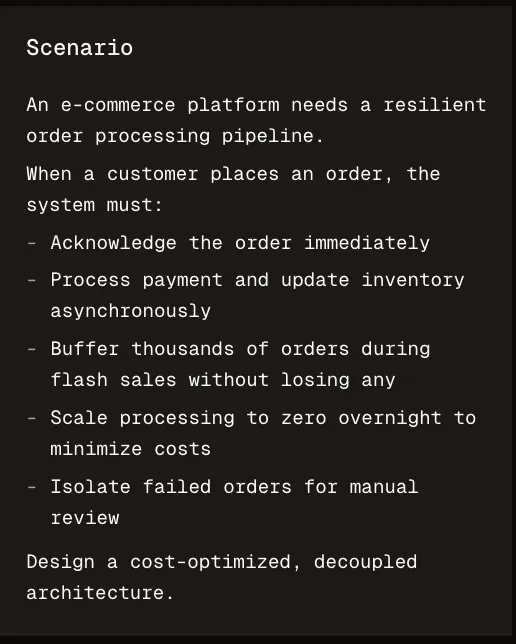
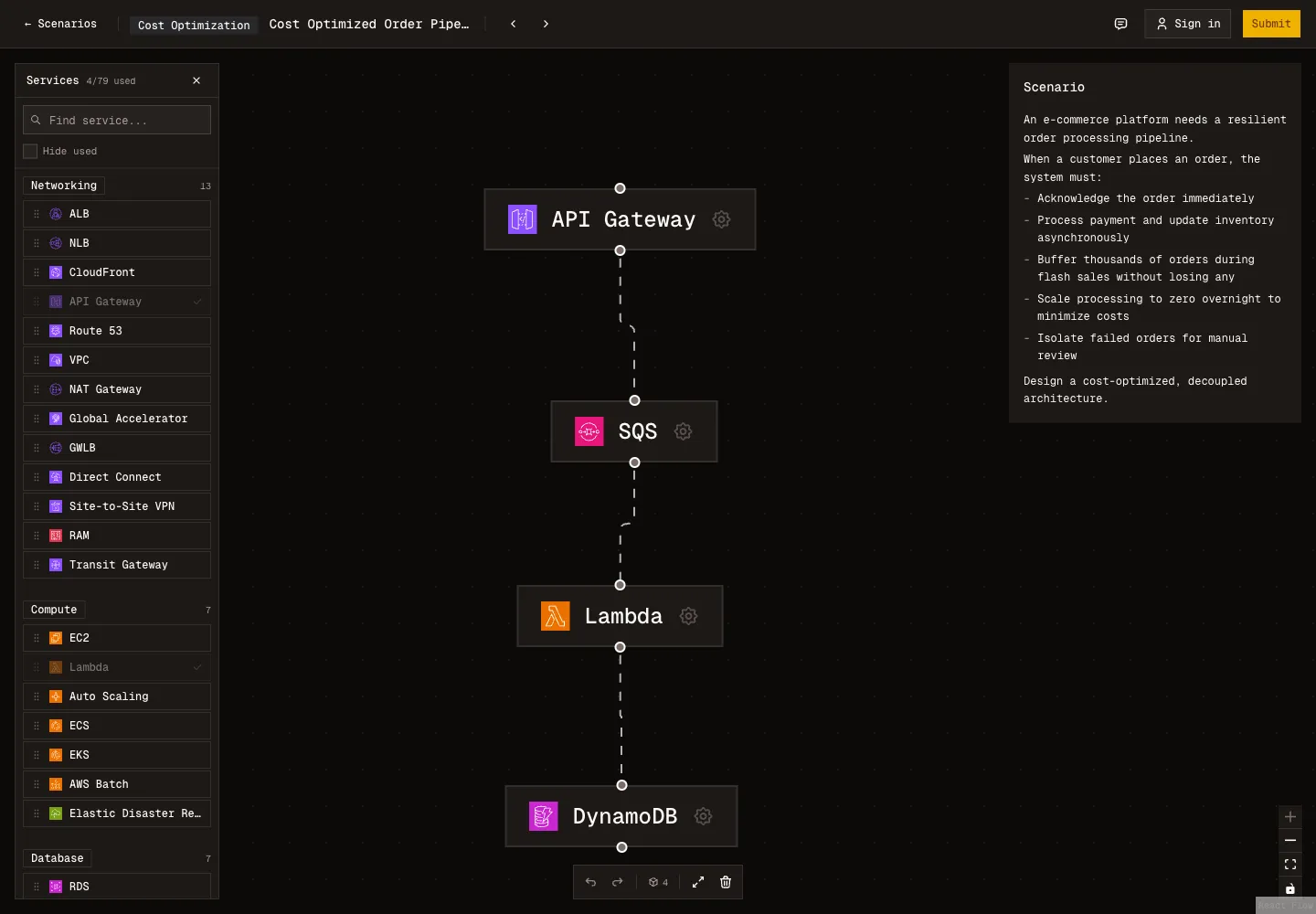
You drag services from the palette onto the canvas and connect them, then submit.
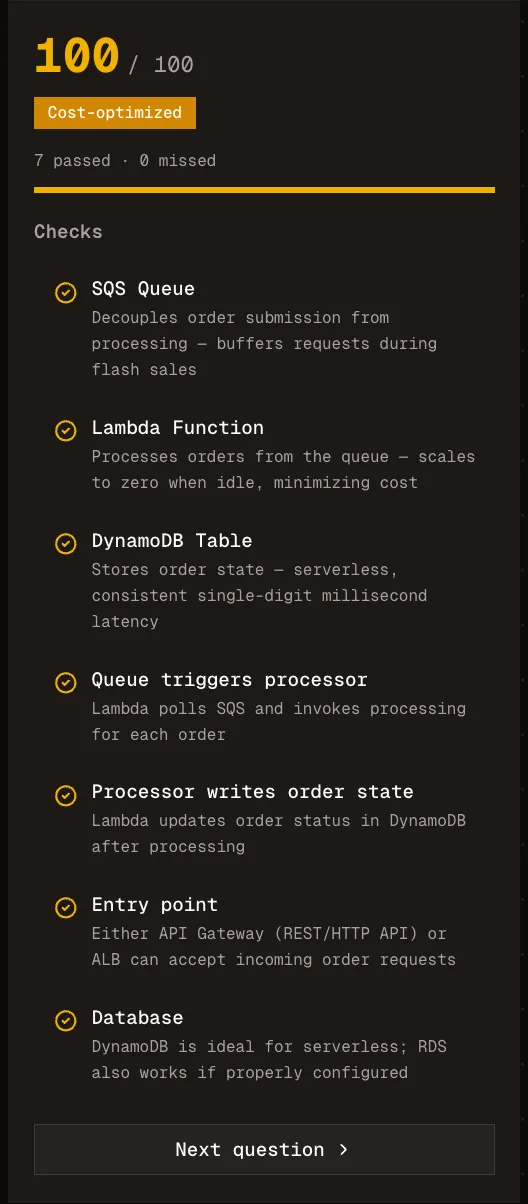
Every check names a service or a connection and says why it matters. When you miss one, it shows up as a common mistake.
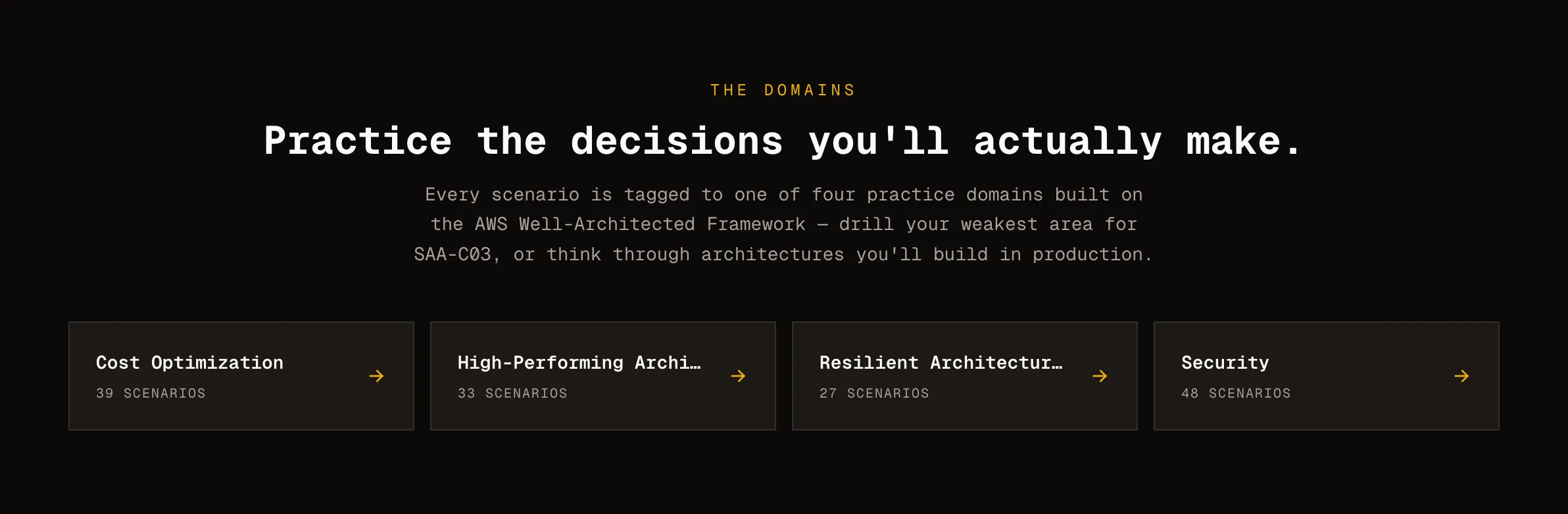
There are 147 scenarios across four domains: Security (48), Cost Optimization (39), High-Performing Architectures (33), Resilient Architectures (27). 79 services in the palette. You can try a scenario without an account.
How it works
The canvas is React Flow. Services get dragged in and connected, so a submitted design is just nodes and edges.
Scoring is a rubric over that graph. It’s mostly deterministic: walk the nodes and edges and check for what the scenario expects. I’m looking to add AI where it’s needed.
The content is 147 scenarios authored from publicly available AWS SAA prep material.
What was hard
Two things.
Keeping the rubric consistent. It has to grow when AWS ships new services, and every scenario still needs to be scored the same way.
Verifying the answers. The scenarios come from public AWS SAA prep material, so every answer needed checking.
What’s next
Other cloud providers. After that, generic system design.


